Our winter issue is here!
Introducing NYRA #49
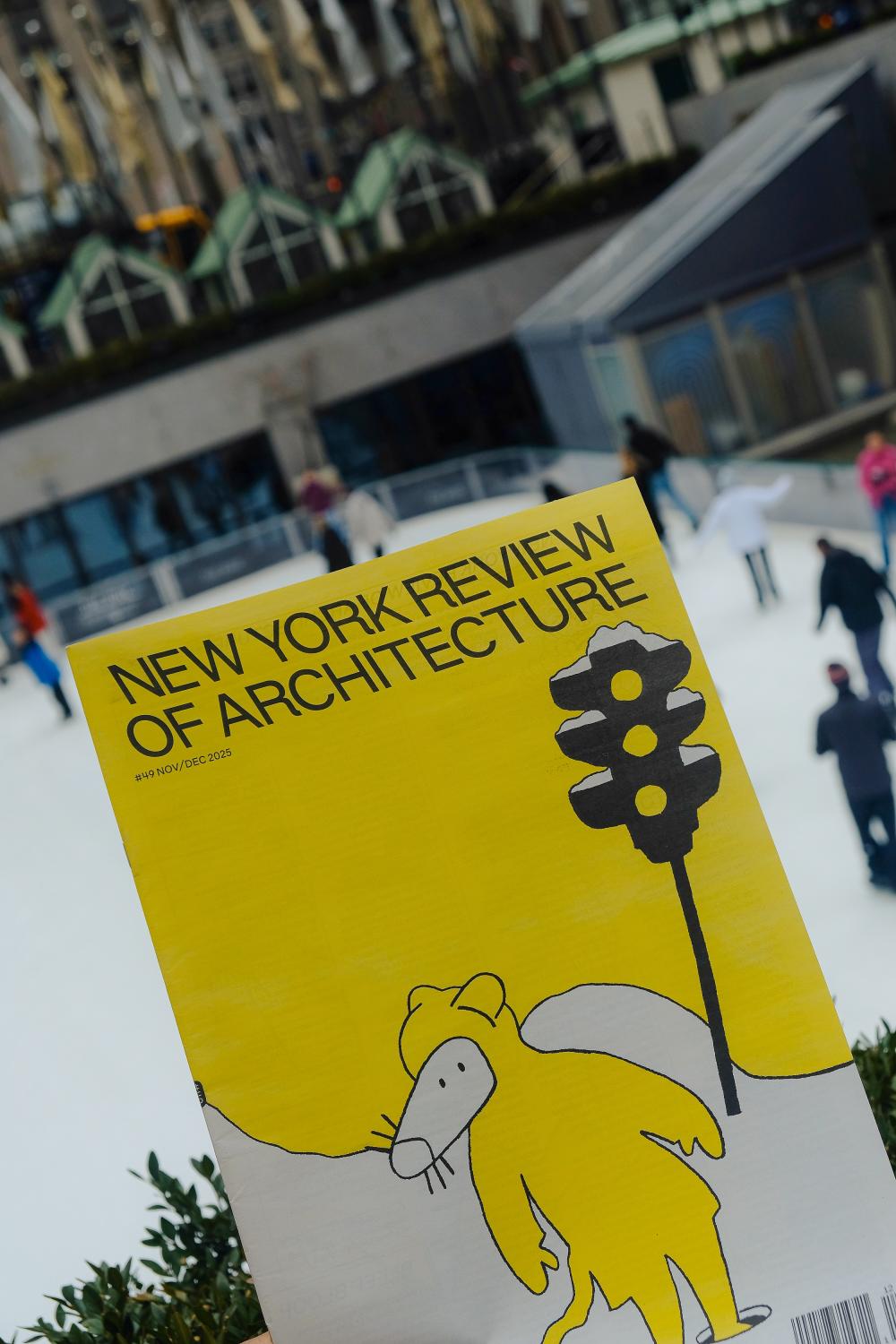
Now is the winter of our discontent.
FROM THE EDITORS
No Chill
On the cover, NYRA’s house illustrator Sean Suchara pays brumal homage to Ezra Jack Keats’s 1962 children’s classic, The Snowy Day, which, with nearly half a million checkouts from the New York Public Library system, lays claim to its most borrowed title of all time. While we humbly bow to Keats’s circulation figures, NYRA has been making the rounds in its own way, as #49’s embarassment of letters to the editors attests. More than five thousand words of impassioned exchange about buildings, design, and cities bridge two consecutive double spreads: a small but meaningful sample of the readers and writers who make NYRA a redoubt of curious, irascible criticism against the sclerosis of corporate media, the anxious credentialism of the crumbling ivory tower, the brain-outsourcing technology of GPT, and other discourse-chilling disruptions in the marketplace of attention. We thank our readers for this most precious commodity and hope our new issue will kindle spirited conversation in snowy days to come.

LETTERS
Thirty-eight pages into NYRA #46/47, I was downright chipper from all I’d read. Then I came across Mark Krotov’s take on the latest MTA subway map on page thirty-nine. Here, I finally bubbled up and over with something like rage.
—Julian Tepper
We should dispel the idea that a subway map is only meant to streamline our schedules and realize in its renovated modernism a form of ideological erasure.
—Max Feigelson
Contra Tepper’s nostalgia and the neo-historicist atrocities Duffy’s boss is working to impose by fiat and bulldozer, modernism can be “beautiful and alive and worthy of our minds.” Modernism worthy of our minds can be found in nearly every corner of the city, and we’re lucky to now have it underground, once again.
—Mark Krotov
Charlie Dulik argues that saving the Elizabeth Street Garden is effectively preserving the status quo, and that the proposed development is part of the solution to the city’s housing crisis. But the development includes unnecessarily large commercial spaces; bland, non-ecological green space that works against nature; and neoliberal, means-tested notions of “affordability.”
—Miles Grant
The conflict between one’s disdain for blandness and another’s for vapid kitsch—a pretty boring duel of subjective preferences—may not be the best way to determine whether apartments for those who desperately need them get built.
—Charlie Dulik
Huw Lemmey’s review of my book Joyspace is a dazzling performance— clever, acerbic, and written with undeniable style. But, reader beware, its brilliance is bound up in a particular critical stance that privileges suspicion over possibility.
—Adam Rolston
Sometimes if one feels a book is poorly written, or an argument poorly made, it’s worth just saying so, and explaining why you think that’s the case. Anything else is public relations.
—Huw Lemmey
Certainly contributors to NYRA are not above the historical bloviating that Hatherley condemns. (Indeed, bloviating might even be the magazine’s house style. Criticism without a little bloviation is like a steak-frites without a glass of red wine—what’s the point?)
—Emmett Zeifman
I am puzzled as to why a sentence praising the work of Herman Jessor, a Jewish socialist immigrant whose work was almost entirely within New York City, should be accused of a dog-whistling attack on “coastal elites” if the same sentence expresses doubt in the world-transforming merits of Peter Eisenman.
—Owen Hatherley
PS: Cindy Sherman, a friend, used the house for two of her early Film Stills. Both Man Rays swam in the pool.
—Alice Phillips Swistel
Times change and then change again. One remains grateful for the dynamism and for the acute memories of those who are lucky enough to recall the contrast.
—Matthew Specktor
ESSAYS

Thomas de Monchaux has a brewed awakening on Astor Place. Kay Wisnowski takes a diacritical dive into the Châteauverse. Aaron Timms will always have Paris. Nick Irvin reads Ben Shahn against the grain. Jackson Arn hails King Vidor’s The Fountainhead.
I always seem to end up on Astor Place. It’s where New York City stores the 1990s.
—Thomas de Monchaux
The new generation of chatelains are not to the manor born. As content creators, they are bound by the class solidarity of the hustle.
—Kay Wisnowski
I arrived in Paris, at the age of seventeen, a virgin. I left Paris, at the age of eighteen, a virgin.
—Aaron Timms
Sometimes Old Left ideas don’t feel so old.
–Nick Irvin
Every skyscraper or sculpture or print edition of New York Review of Architecture begins with an act of destruction like the one Vidor shows us—a gorgeous desecration of the way things were. Not art, but no art without it.
–Jackson Arn
REVIEWS
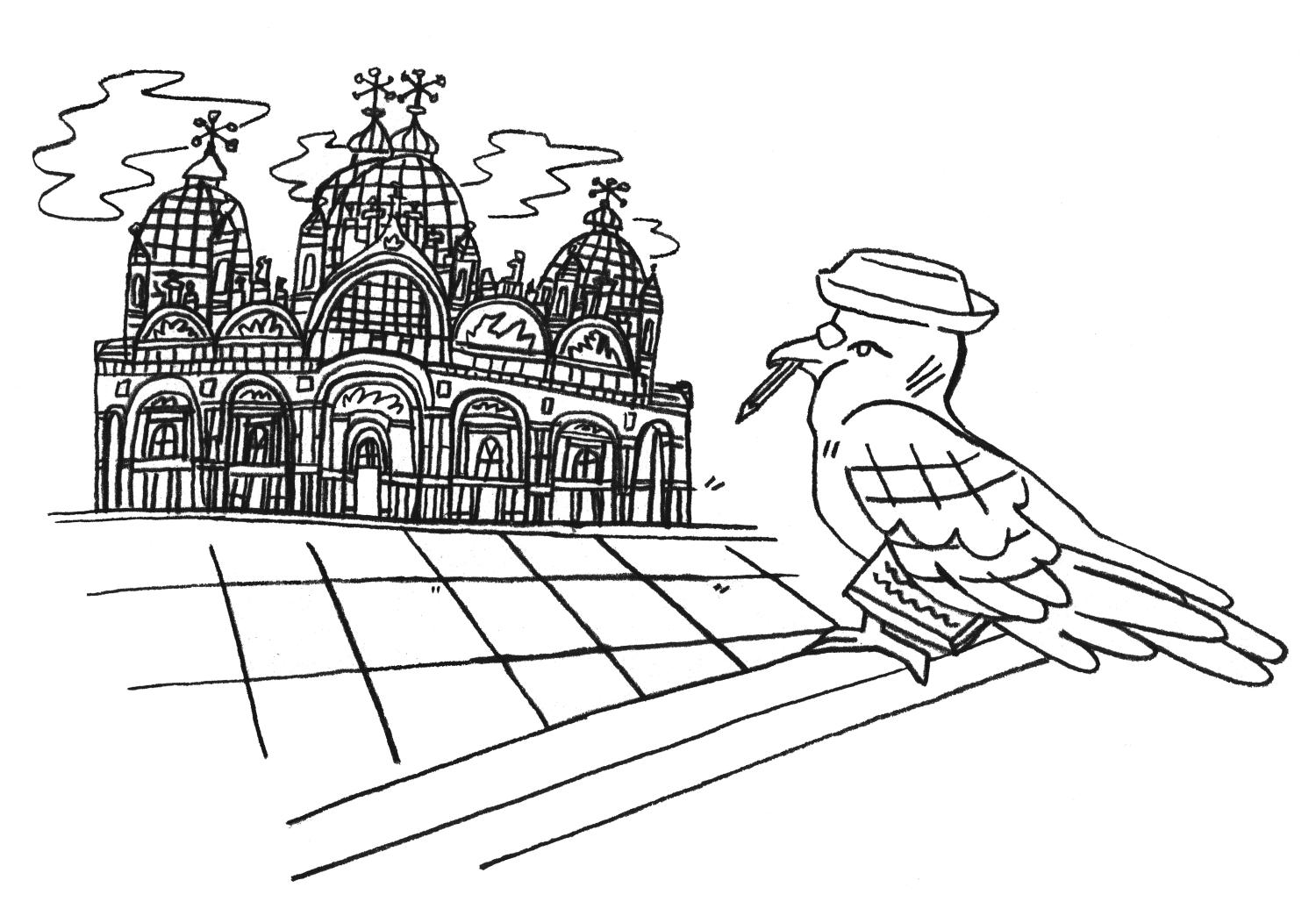
Phil Coldiron leaves no stone of Venice unturned. Marco Roth burns Candela at both ends. Enrique Ramirez opens the floodgates. Marianela D’Aprile finds that LES is more. Nick Murray sees Spotify run—and isn’t impressed. James Andrew Billingsley wags a finger at Wagner Park.
Ruskin was writing, between the lines, against Victorian England’s industrial society, to save his homeland from a revolution he knew it deserved.
—Phil Coldiron
Nothing so good will be built again in New York City, not for the billionaires nor anybody else.
—Marco Roth
Is it possible to conceive of an emotional vocabulary that adequately captures the disorientation of seeing water rearrange familiar geography beyond recognition?
—Enrique Ramirez
The nostalgia channeled by Lower East Side Yearbook is not necessarily one for an idealized past.
–Marianela D’Aprile
Sometimes, navigating Spotify, I feel like I’m in a Truman Show of my own taste.
–Nick Murray
The resulting landscape is a “place” in the way that a ‘bowl’ is now something that you can have for lunch—that is, a container of things standing in for a thing in its own right.
–James Andrew Billingsley
SHORTCUTS
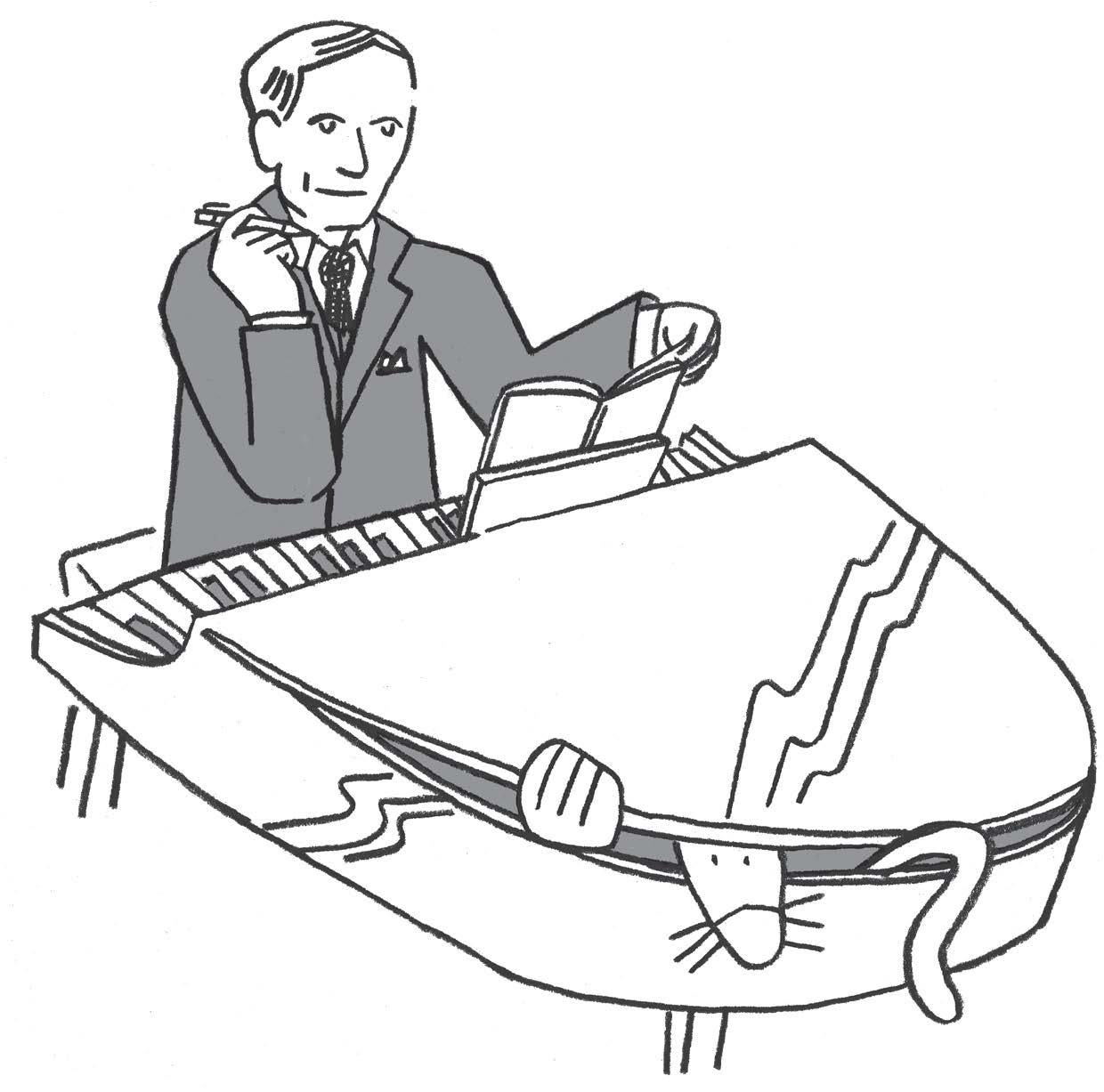
FAST and LOOSE with Hallie Ayres, Justin Beal, Isaac Engelberg, Olivia Gieger, Moze Halperin, Zack Hatfield, Kim Hew-Low, Michael Nicholas, Ian Volner, Daniel Wortel-London, and Niuniu Zhao.
I hadn’t spent the day at my marketing job or taking a hot Pilates class. I am an unemployed writer. I didn’t make sense here.
—Isaac Engelberg
The sculptures shimmer between plane and volume in a kind of dimensional dishabille, plotting ornament’s revenge upon Minimalism.
—Zack Hatfield
You just try to devise a poem that channels the qualia of zoning.
—Daniel Wortel-London
I was struck by a sudden and irrational surge of affection, the kind I typically reserve for entities with a pulse.
—Kim Hew-Low
To paddle the Gowanus of today is to encounter a body of water that is neither fully alive nor quite dead.
—Aurora Tang
125 pages of Adobe Creative Suite, social media activism, and farm-to-table dinner parties culminate in the bathetic labors of running an agriturismo on an inherited Mediterranean property.
—Niuniu Zhao
The total effect is of being in a submarine designed by Muji.
—Michael Nicholas
And much more!
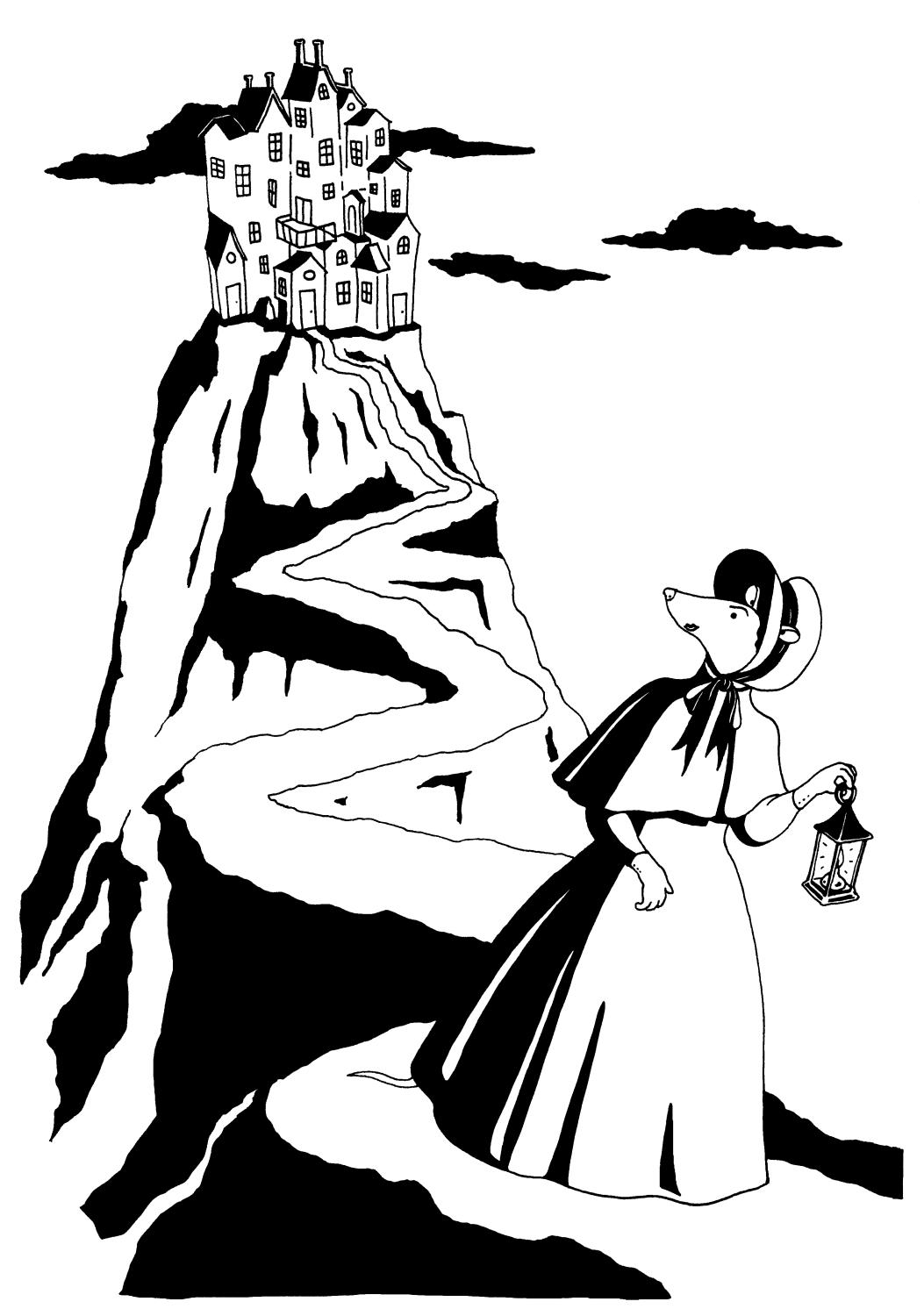
Eric Schwartau finds his Allen wrench in CATTY CORNER. Anna Ballan goes the full Brontë in ADDRESS A BUILDING. Kate Wagner spares us the East Wing pearl-clutching in WRECKING BALLROOM. Nicolas Kemper harps on Harper’s in PUBLISHERS NOTED.
A cocktail of monogamy and medication had me feeling acquisitive like never before—turning my one-bedroom into a paint chip gallery show of domestic design, hunting not for hookups but for harmony.”
—Eric Schwartau
Any feverish governess’s fancies are today inevitably punctured by the rumble of the Metro-North and the calls of Columbia rowers below (‘stroke, stroke, stroke’.
—Anna Ballan
The notion that so much as touching the White House is some kind of inconceivable desecration is boring and untrue.
—Kate Wagner
There are black-and-white photos of Kafka randomly taped to windows and walls. Nobody is quite sure who put them up or why.
—Nicolas Kemper
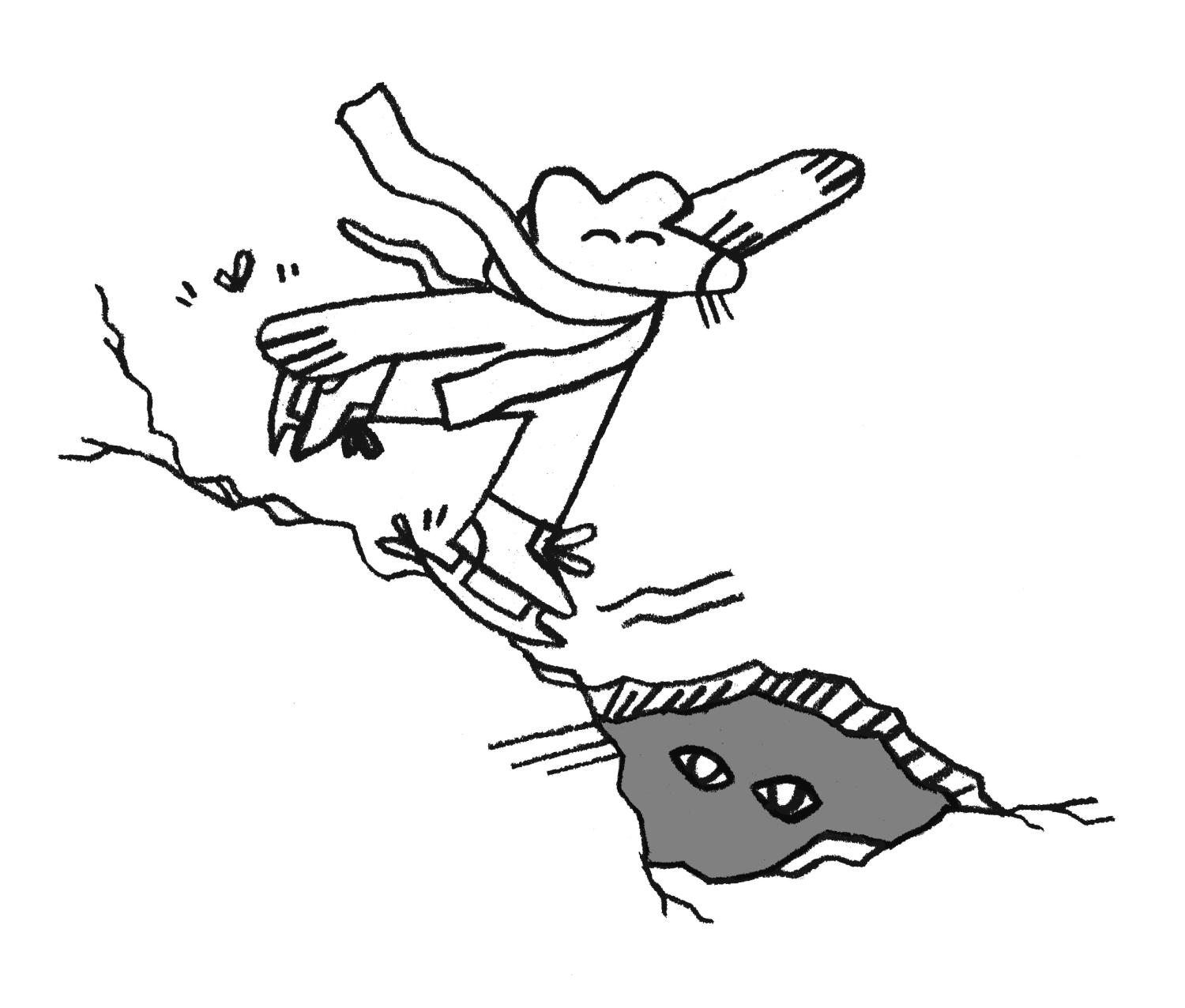
Lauren Martin illustrated the LETTERS and TABLE OF CONTENTS. Suerynn Lee illustrated ESSAYS, ADDRESS A BUILDING, and WRECKING BALL. Sean C. Suchara is our cover illustrator and contributed spot illustrations throughout the issue.
Don’t sleep on our hibernal issue!
Copies of #49 are well on their way to subscribers. Not yet a subscriber? Become one today to bundle up with the best in architecture criticism during the coldest days of winter.

VERY SUBTLE PARTY PLUG
Grab a drink and get hygge in honor of our latest issue at T. J. Byrne’s on Tuesday, January 27. There’s no better time than midwinter to party like it’s 1999, get your (Dominique) Francon on, and bicker over Trump’s ballroom blitz. RSVP here.